
Jumping Spider Resource
Master the Art of
Spider Keeping
Expert care guides, DIY habitat tutorials, and breeder secrets. Everything you need to know about raising healthy jumping spiders
Category Grid
Blog
Fresh from the SpoodCrib
The Fatal Jumping Spider Enclosure Mistake (Data-Backed)
The Ultimate Jumping Spider Starter Kit: The Best Gear for 2026 (Tested & Approved)
The Ultimate Guide to Jumping Spider Courtship, Breeding, and Care (2026)
Contact me
About me
Hey, I'm Mao
For many, the word “spider” triggers instant fear. But where others see monsters, I see a world that is tiny, intricate, and surprisingly intelligent. I built this website with a simple goal: to break the stigma and show you the undeniable charm of jumping spiders.
Think of this place not just as an encyclopedia, but as a cure for arachnophobia. If you can look into their big, watery eyes for just ten seconds, I bet your fear will turn into curiosity—or even love. Let’s explore these “eight-legged puppies” together.
Mao
Spider Enthusiast
F.A.Q.
Lorem ipsum dolor sit amet.
Very rarely! Jumping spiders are incredibly docile and friendly. They are more likely to jump away from you than to bite. They usually only bite if they feel squeezed or in danger. Even if a bite were to happen, their venom is harmless to humans—much milder than a bee sting.
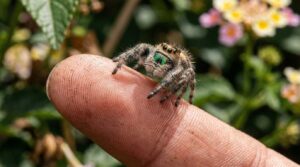
Yes! This is why people love them. Jumping spiders are curious and intelligent. Many owners enjoy letting their spiders explore their hands. Just remember to be gentle, move slowly, and let the spider jump onto you—never grab or squeeze them.
Not at all. They are often called the “cats” of the spider world because they are independent yet full of personality. They require very little space, don’t need expensive equipment, and are very low maintenance. They are the perfect beginner pet for anyone new to exotic animals.
They are active hunters, so they need live prey! Babies (slings) eat fruit flies, while adults enjoy mealworms, green bottle flies, or small crickets. Watching them stalk and hunt their lunch is one of the most fascinating parts of keeping them.
In captivity, most common species (like the Phidippus regius) live between 1 to 2 years. Females typically live a bit longer than males. While their time with us is short, it is packed with personality and memorable moments.