
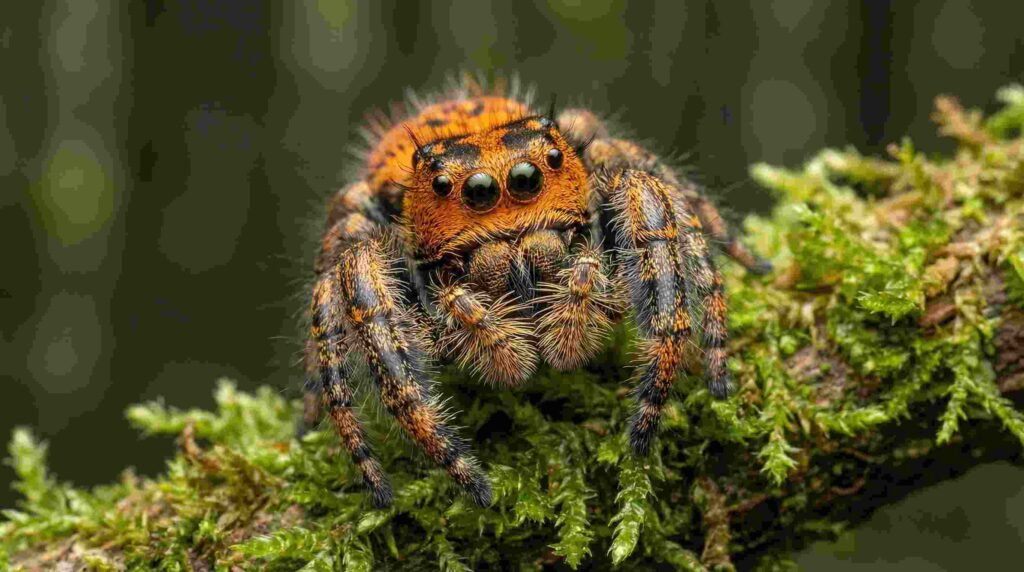
Jumping spiders (Salticidae) are intelligent and interactive pets, but their time with us is fleeting. The Quick Answer: In captivity, most jumping spiders live between 1 to 2 years. Females generally outlive males, with some well-cared-for Phidippus regius females reaching up to 3 years. Understanding How Long Do Jumping Spiders Live is crucial for proper care.
Understanding Jumping Spider Lifespan by Spe
In this guide, we explore the question, How Long Do Jumping Spiders Live, and how their lifespan can be affected by various factors.
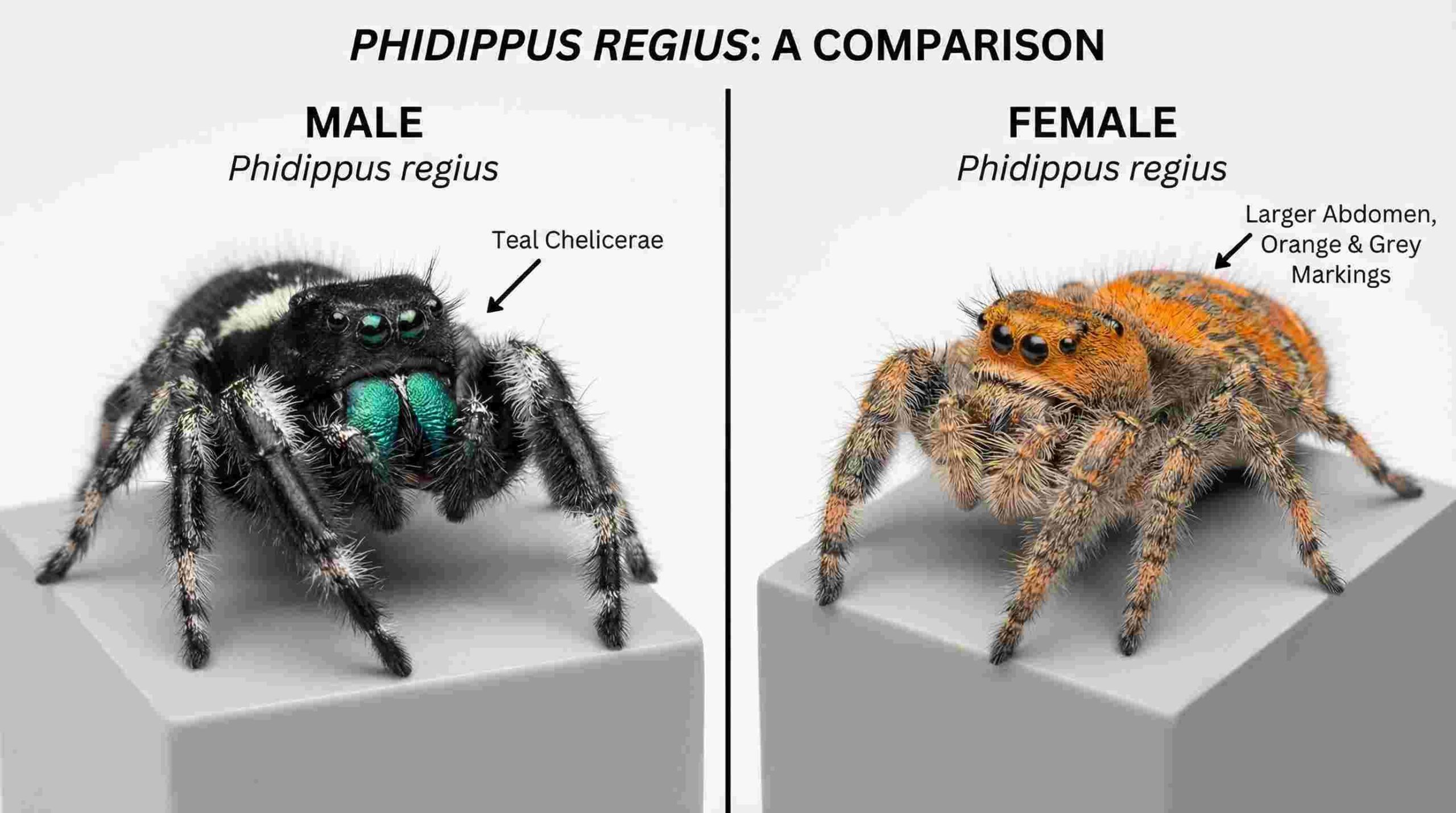
Male vs. Female Lifespan
- Females (1.5 – 3 Years): Slower metabolism, live longer to lay eggs.
- Males (8 Months – 1.5 Years): Mature faster, biologically designed to mate and pass on genes quickly.
Lifespan by Species
- Phidippus regius (Regal): 18 – 24 Months
- Phidippus audax (Bold): 12 – 24 Months
- Habronattus: 6 – 12 Months
*Note: Larger species generally have slower metabolisms compared to smaller jumpers.
3 Factors That Extend (or Shorten) Their Life
FAQ
Are jumping spiders dangerous or poisonous?
Technically, yes, they possess venom to subdue prey. However, it is medically insignificant to humans (comparable to a mild mosquito bite). They are docile and not aggressive.
Do jumping spiders bite?
Extremely rare. They generally only bite in self-defense if crushed or handled roughly. Their first instinct is almost always to jump away or hide.
Can they recognize their owners?
Surprisingly, yes. Studies suggest they can visually detect biological motion. Many keepers report their spiders “watching” them from inside the enclosure and reacting to their presence.
Do they need a water bowl?
No! Jumping spiders can easily drown in open water bowls. Instead, use a spray bottle to lightly mist the side of the enclosure once a day. They will drink the droplets.
Can I keep two spiders together (Co-habitation)?
Never. Jumping spiders are cannibalistic solitary hunters. If you put two together, the larger one will eventually hunt and eat the smaller one. Always house them individually.
What do jumping spiders eat?
They eat live insects. Slings (babies) eat flightless fruit flies (*D. hydei* or *D. melanogaster*). Adults enjoy green bottle flies, mealworms, or small crickets.
What is the best enclosure size?
They need vertical space. A 4x4x6 inch or 6x6x9 inch enclosure is ideal for an adult. Ensure it has cross-ventilation and opens from the front (not the top) to avoid destroying their web hammocks.
Do they make webs?
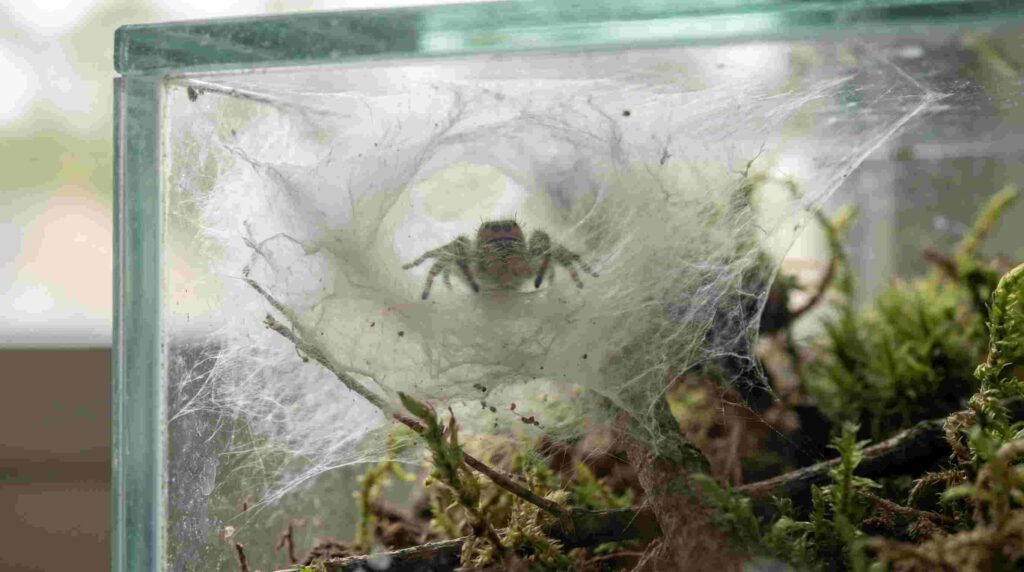
They do not spin webs to catch prey like orb-weavers. Instead, they use silk to build thick sleeping sacks (hammocks) for safety at night or during molting.
Why is my jumping spider not eating?
Common reasons include: 1) They are in pre-molt (preparing to shed skin), 2) They are full/obese, or 3) The temperature is too low. If their abdomen is round, they are fine.
What is the best species for beginners?
The Phidippus regius (Regal Jumping Spider) is widely considered the best beginner spider due to its large size, calm temperament, and relative hardiness.