
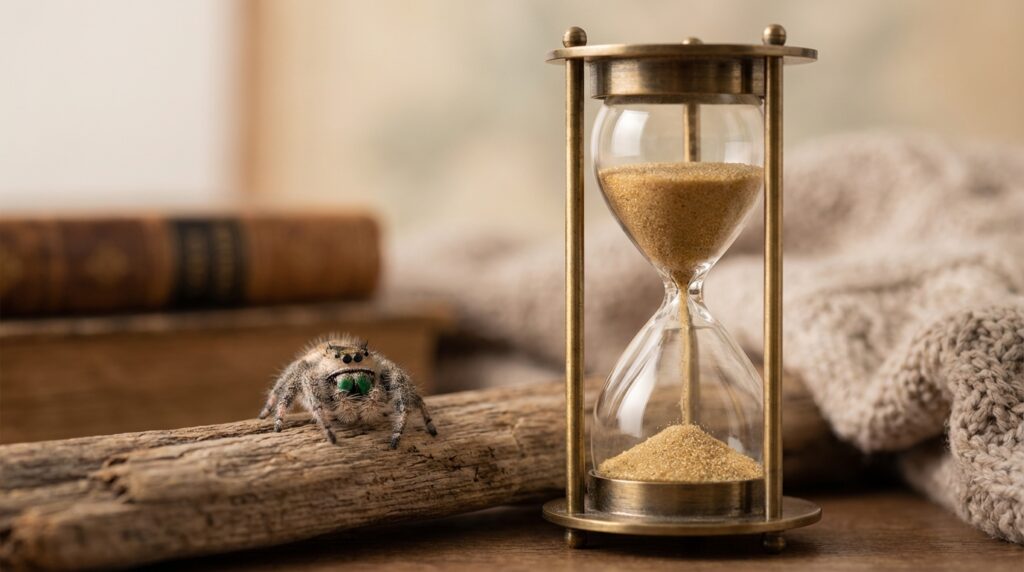
Many new pet owners ask: how long can a spider go without eating? In this complete survival guide, we will break down the starvation limits of Jumping Spiders and Tarantulas, and help you identify the difference between a hungry spider and a pre-molt spider.
- 1. The Short Answer
- 2. Survival Span by Species (Chart)
- 3. Water vs. Food: The Real Danger
- 4. Signs Your Spider is Actually Hungry
- 5. FAQ: Molting & Cannibalism
Could a spider outlast you in a starvation showdown? Probably. While we humans get “hangry” after missing lunch, spiders have evolved extraordinary survival strategies to endure long periods without food.
The Short Answer
⚡ The Short Answer: On average, most spiders can survive 30 to 60 days without eating. However, this varies wildly by species. Active hunters (like Jumping Spiders) need to eat more often, while large sedentary species (like Tarantulas) can go for months.
Survival Span by Species
Size and lifestyle matter. Larger spiders usually have larger fat reserves and slower metabolisms.
Water vs. Food: The Real Danger
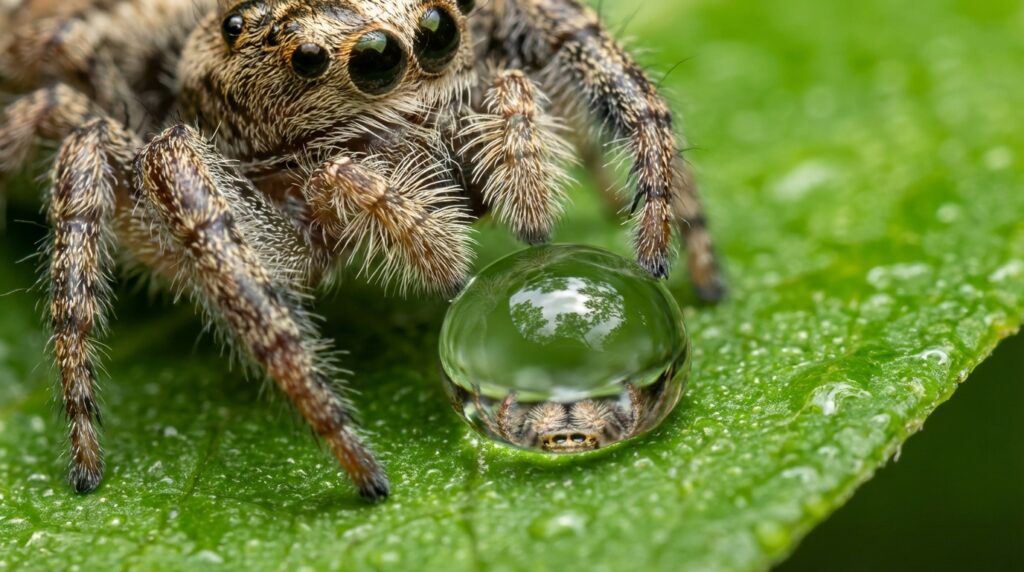
Here is the most important rule of arachnid care: A spider can survive weeks without food, but only days without water.
Spiders possess sophisticated hydration mechanisms, like hydrophobic hairs (setae) and an oily cuticle to retain moisture. However, in captivity, dehydration is the #1 killer.
-
Hydration Supports Metabolism: Water is essential for digestion and waste elimination.
-
Dehydration Signs: Curled legs (death curl) and a shriveled abdomen.
Signs Your Spider is Actually Hungry
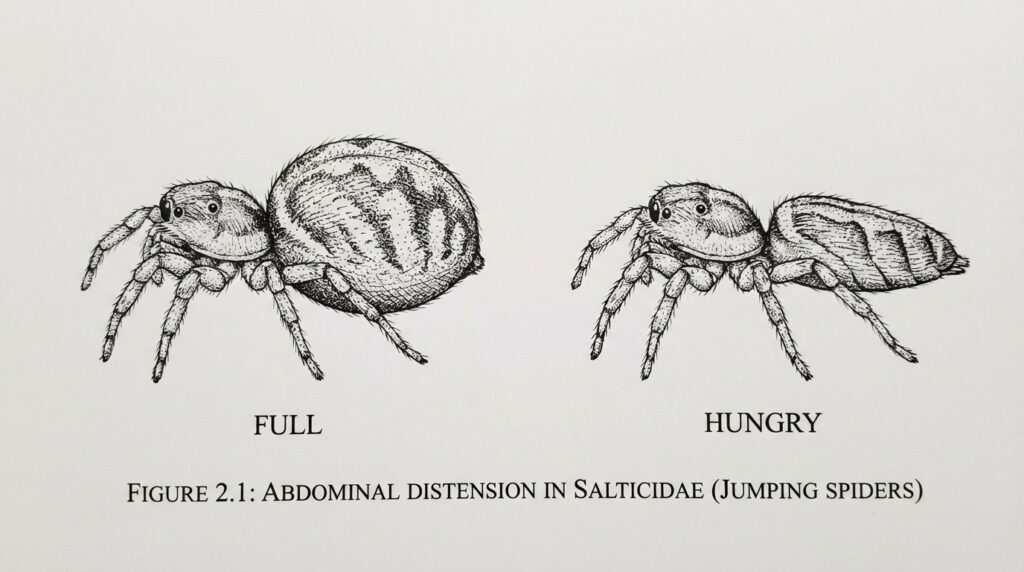
Don’t rely on the calendar; look at the spider’s body. The abdomen (butt) tells you everything.
-
Round & Plump: Do not feed. They are living off stored energy.
-
Thin or Wrinkled: Feed immediately. Offer nutrient-dense prey like bottle flies or crickets.
5. FAQ: Molting & Cannibalism
Q: Why is my spider refusing food?
A: If the abdomen is round but they won’t eat, they are likely in pre-molt. Spiders often stop eating for days or weeks before shedding their skin. This is normal behavior.
Q: Will spiders eat each other if starving?
A: Yes. Cannibalism is a survival strategy. In extreme food scarcity, siblings may eat each other to reduce competition. Always keep spiders in separate enclosures!
Q: Can baby spiders survive without food?
A: Surprisingly, yes. Newly hatched spiders (slings) are often equipped to survive without immediate feeding, nearly matching the endurance of adults.
How Long Can a Spider Go Without Eating? 5 Truths From Real Jumper Keeping
- Survival Limits: On average, most spiders can survive for 30 to 60 days without food. This depends heavily on the species and age.
- Jumping Spiders: Active hunters like Phidippus regius have faster metabolisms and should eat every few days, though they can withstand short fasting periods.
- Hydration is Key: A spider can die of dehydration much faster than starvation. Always mist their enclosure or offer a water droplet if they stop eating.
- Pre-molt Signs: If your spider is refusing food but has a round abdomen, do not panic. They are likely preparing to molt.
- The Answer: So, how long can a spider go without eating? While tarantulas can go for months, smaller true spiders usually need food within a few weeks.