
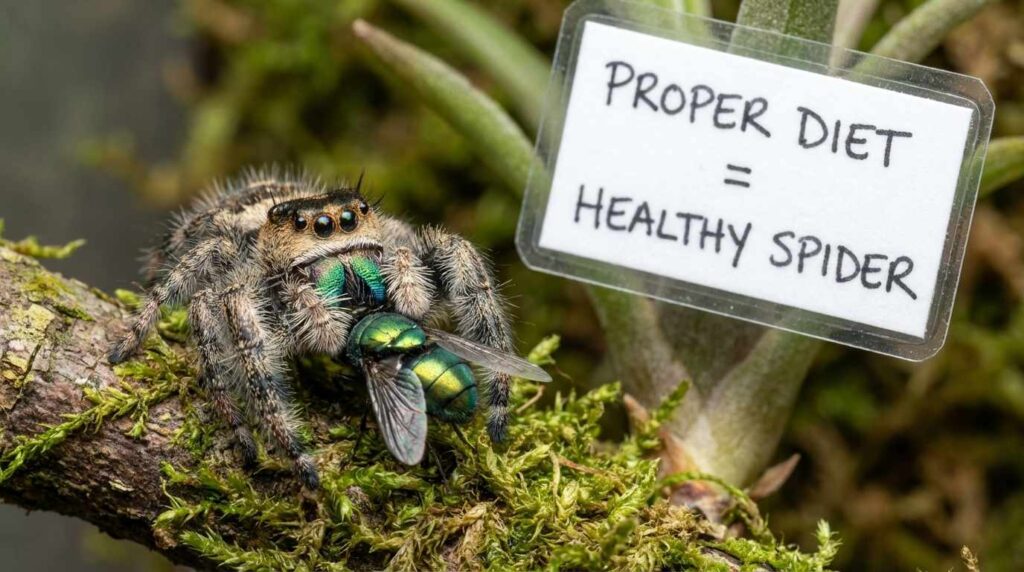
What Do They Eat?
Conclusion: Jumping spiders are obligate carnivores that require live prey to survive. They cannot eat plants or pre-killed insects (unless trained). The best diet consists of Flies (Green/Blue Bottle) for adults and Fruit Flies for spiderlings. To summarize, the question remains: What Do Jumping Spiders Eat?
Warning: Never feed them ants or fireflies, as these can be toxic.
Many new keepers ask: what do jumping spiders eat to stay healthy? Understanding the proper jumping spider diet is crucial for their growth. In this guide, we will answer what do jumping spiders eat at every stage of their life, from sling to adult
Jumping spiders belong to the family Salticidae
Feeding Schedule by Age (Instar Guide)
Feeding Schedule by Age (Instar Guide)
Understanding "what" to feed depends entirely on the size of your spider. A good rule of thumb is that the prey should be no larger than the spider's body. Based on the growth stages (Instars), here is the recommended diet:
In this article, we explore the question: What Do Jumping Spiders Eat? Understanding their dietary needs is crucial for their health and well-being.
| Spider Stage (Instar) | Recommended Prey | Feeding Frequency |
|---|---|---|
| 1st Instar (Hatchling) | None (They stay in the nest) | Do not feed until they disperse |
| 2nd – 3rd Instar | Small Fruit Flies (D. melanogaster) | 2 flies every day |
| 4th Instar | Large Fruit Flies (D. hydei) | 2 flies every day |
| 5th Instar | Large Fruit Flies or Hatchling Locusts | Every 2 days |
| 6th Instar | Curly Wing Flies or House Flies | Every 2 days |
| 7th – 8th Instar | Green Bottle Flies or Small Locusts | Every 2 – 3 days |
| Sub-Adult / Adult | Blue Bottle Flies, Large Locusts | Every 3 – 4 days |
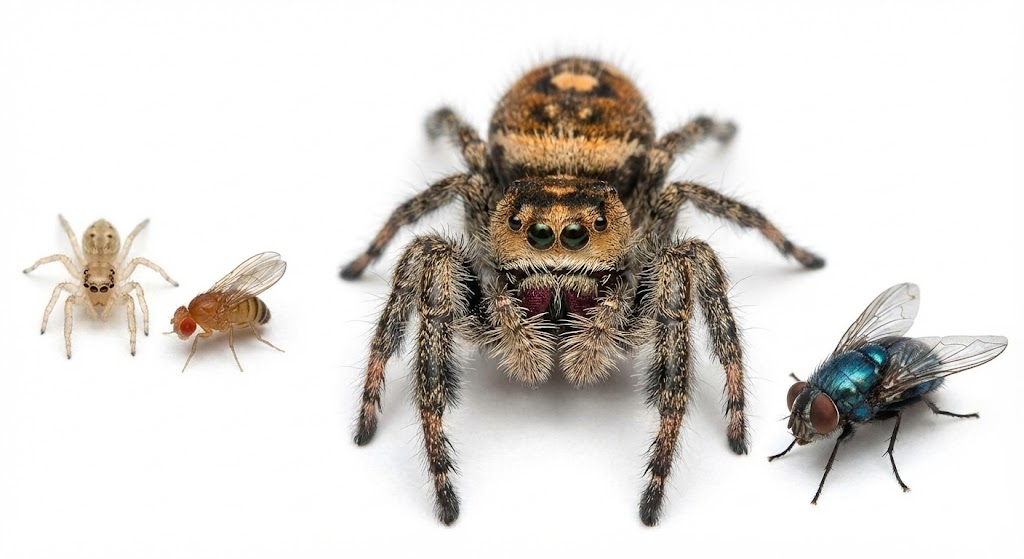
Note: Treat foods like Waxworms or Mealworms can be offered occasionally to older spiders, especially after a molt to regain energy.
When to Feed? Look at the Abdomen
Don’t just rely on a calendar. The best way to know if your jumping spider is hungry is to observe its abdomen (bum) size.
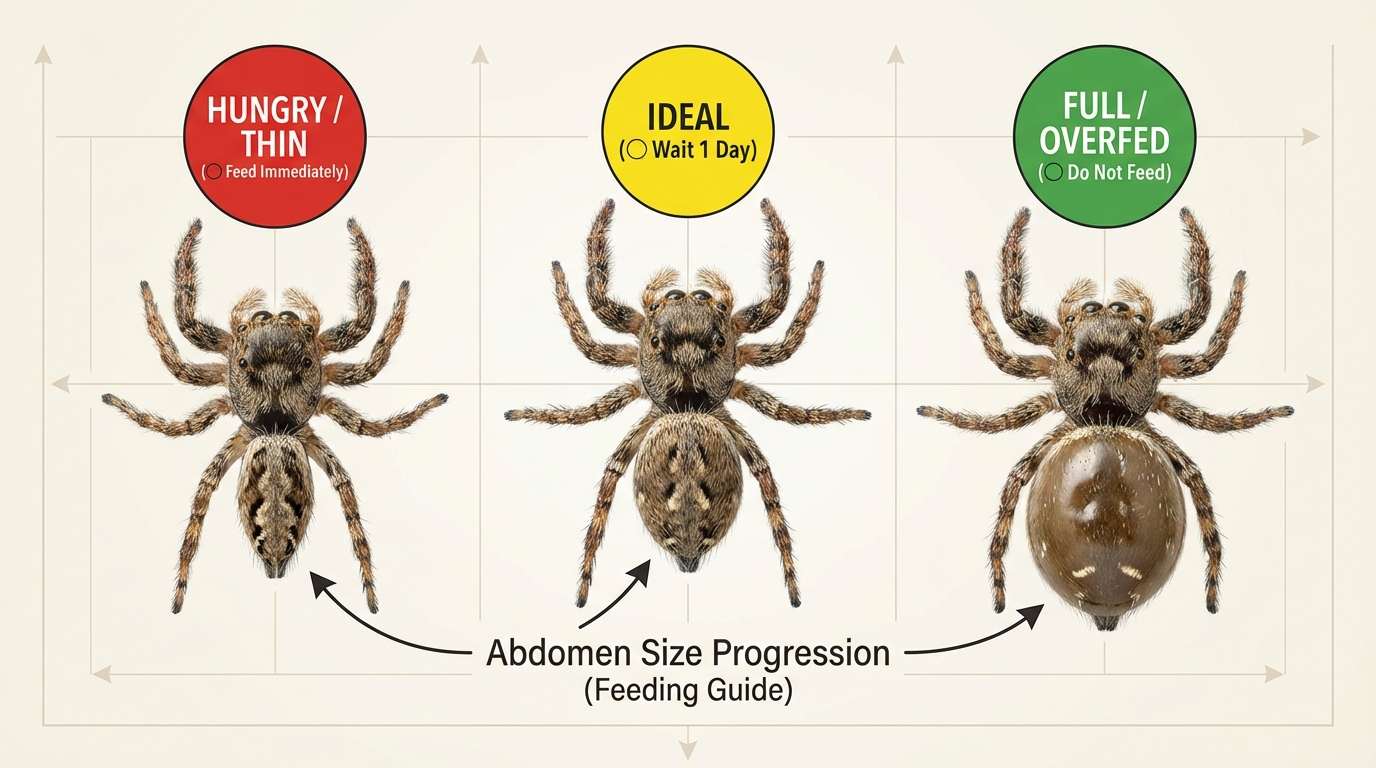
- 🟢 Large & Round (Plump): DO NOT FEED. The spider is full. Overfeeding can cause injury from falling.
- 🟡 Slightly Larger than Head: Ideal condition. You can offer a small meal or wait one more day.
- 🔴 Thinner than Head (Flat): FEED IMMEDIATELY. Your spider is dehydrated or starving. Offer a fatty treat like a waxworm if available
- 🛑 Mature Females: They tend to stay rounder naturally to support egg production, so aim to feed them every 2 days to keep them happy.
The Best Feeder Insects: Pros & Cons
| Feeder Insect | Safety Level | Pros | Cons |
|---|---|---|---|
| Flies (Green/Blue) | ⭐⭐⭐⭐⭐ (Safest) | Cannot bite; spiders love hunting them. | Hard to raise at home; must buy online. |
| Fruit Flies | ⭐⭐⭐⭐⭐ (Safest) | Essential for babies; easy to culture. | Too small for adults. |
| Crickets | ⭐⭐ (Risky) | Available everywhere; cheap. | Can BITE and KILL. Must remove at night. |
| Mealworms | ⭐⭐ (Okay) | Easy to keep; high fat. | Can burrow and turn into beetles. |
Not all bugs are created equal. Some are safe, while others can fight back.
What NOT to Feed Your Spider
Never feed your jumping spider wild-caught bugs from your garden, as they may carry parasites or pesticides. Specifically, avoid these:
- ❌ Ants: They contain formic acid and can bite/sting.
- ❌ Fireflies (Lightning Bugs): Highly toxic to reptiles and arachnids.
- ❌ Beetles: Their hard shells can damage spider fangs, and they are aggressive
- ❌ Wild Spiders: They might eat your pet instead!
Do Jumping Spiders Drink Water?
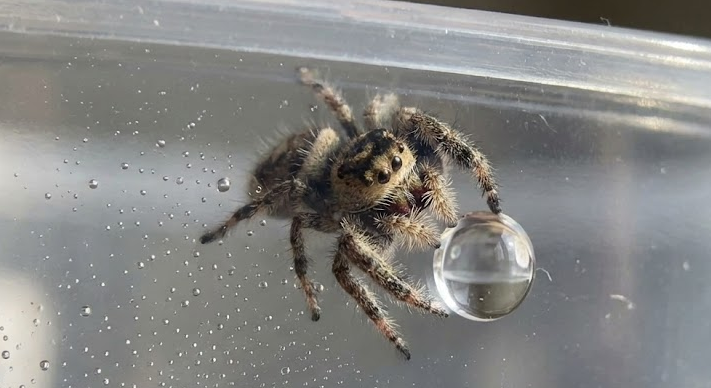
Yes! Hydration is just as important as food.
How to offer water: Use a spray bottle with a “fine mist” setting. Spray one side of the enclosure wall every 1-2 days.
Do not use bowls: Spiders have book lungs under their bellies and can drown in standing water bowls.
Tap vs. Distilled: Most keepers use tap water without issues. However, if your local water has high chlorine or heavy metals, bottled spring water or distilled water is safer.
Q: My spider hasn’t eaten in 3 weeks, is it dying?
A: Not necessarily. If it is an older adult or preparing to molt (pre-molt), they can go weeks without food. Check if they are building a thick hammock web.
Q: Can I feed my spider dead bugs?
A: Usually no. Jumping spiders are visual hunters and the movement of live prey triggers their feeding instinct.
Q: When is the best time to feed?
A: Morning is best, as jumping spiders are diurnal (active during the day). Always remove dangerous prey like crickets before nightfall.
Now you know exactly what do jumping spiders eat. By following this schedule, your pet will thrive. Remember, a varied diet is the key.”
Want to learn more? Check out our other Jumping Spider Care Guides or read more About Mao.”
useful!!